Unleashing Your Creativity: Using Self-Hypnosis to Unlock Your Imagination

A blank page rarely stays blank because you lack ideas. It usually stays blank because the part of your mind that judges ideas is working faster than the part that generates them.
Why creative blocks happen
Your conscious mind is a good editor and a poor idea generator under pressure. When you sit down to create, it often starts judging an idea before it has fully formed: too obvious, too strange, not good enough to write down. That judgment loop, not a lack of imagination, is what most people experience as being blocked.
How self-hypnosis changes this
In a relaxed, focused state, the critical, judging part of your mind quiets down. This gives the more associative, imaginative part of your brain room to work without being shut down mid-thought. Many writers and artists describe their best ideas arriving in half-asleep states, in the shower, or on a walk, precisely because the inner critic is distracted or absent. Self-hypnosis creates that same condition deliberately, on demand, rather than waiting for it to happen by accident.
A simple practice to try
- Find 15 quiet minutes and use a relaxation-focused audio to settle into a calm, receptive state.
- Once relaxed, picture the specific project you are stuck on, without trying to force a solution.
- Let images or fragments surface without judging them. Write or record anything that appears, even if it seems unrelated at first.
- Return to your work immediately afterward, while the state is still fresh, rather than saving it for later.
Why forcing it backfires
Pushing harder when you are blocked usually makes the judging voice louder, not quieter. The mind works best on a creative problem when it is given room rather than pressure. That is the entire logic behind using a relaxed state instead of gritting your teeth at a blank page for another hour.
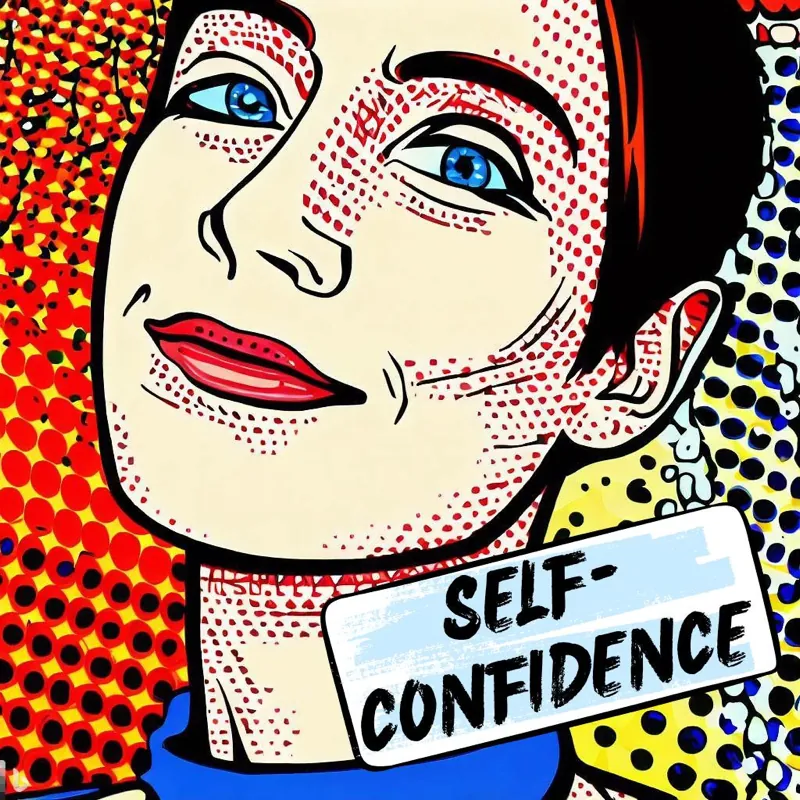
If creative blocks show up alongside a broader pattern of self-doubt or perfectionism, Self-Confidence Booster works on the belief underneath rather than the symptom.